

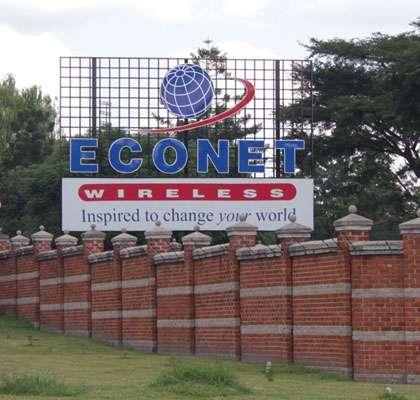
When Econet Wireless Zimbabwe announced plans to voluntarily delist from the Zimbabwe Stock Exchange (ZSE), it sent shockwaves far beyond the equities market. This was not just another corporate action. It was a signal, about valuation, capital access, investor confidence, and the evolving structure of African telecoms.
Backed by reporting from Bloomberg , Business Insider Africa , and NewsDay Zimbabwe , this post unpacks what Econet’s decision really means for shareholders, the ZSE, and Zimbabwe’s broader tech and investment ecosystem.
The Headline Decision: Why Econet Is Delisting
At the centre of the move is a familiar complaint among African corporates: persistent undervaluation.
For years, Econet has traded at a steep discount to comparable telecom operators across Africa. While peers such as MTN, Vodacom, Airtel, and Orange trade at 6–8x EV/EBITDA, Econet says it has failed to achieve anything close to that multiple locally. According to Bloomberg, the company explicitly cited this valuation gap, noting that its regional peers have already unlocked value by separating their tower and infrastructure assets.
From Econet’s perspective, remaining listed on the ZSE no longer served shareholders’ long-term interests.
The InfraCo Strategy: Following Global Telecom Best Practice
Rather than a simple exit, Econet’s delisting is part of a restructuring playbook increasingly common in global telecoms.
The company plans to spin off its passive infrastructure including:
- Mobile towers
- Real estate
- Power and energy assets
These will sit under a new entity, Econet Infrastructure Company Limited (Econet InfraCo), which will be listed on the Victoria Falls Stock Exchange (VFEX).
Under the proposed structure:
- Econet retains 70% ownership of InfraCo
- Up to 30% of shares will be used to settle exit offers for shareholders who do not want exposure to an unlisted operating company
This separation allows investors to value infrastructure and telecom operations independently, a move that has already unlocked billions in value elsewhere on the continent.
The Market Impact: A US$700 Million Hole in the ZSE
If Econet’s strategic rationale is clear, the market consequences are far more painful.

According to NewsDay Zimbabwe, Econet’s exit could wipe more than US$700 million off the ZSE’s market capitalisation. At its peak following the announcement, Econet briefly became the ZSE’s largest listed company with a valuation above US$1 billion, before stabilising around US$739 million
Once Econet leaves:
- Total ZSE market cap is projected to fall to ~US$2.35 billion, down from over US$3 billion
- One of the exchange’s most liquid and widely held stocks disappears
- Daily turnover, index weighting, and institutional participation are expected to weaken further
Financial securities analyst Kuda Taimo warned that removing a cornerstone stock like Econet could trigger a self-reinforcing cycle: reduced liquidity → higher volatility → lower investor participation → declining market relevance.
A Broader Trend: Is the ZSE Losing Its Shine?
Econet’s exit does not happen in isolation.
NewsDay points out that 2025 has already seen multiple delistings, including:
- OMTT ETF
- Khayah Cement
- Truworths
- National Tyre Services (scheduled for December 2025)
If Econet shareholders approve the move, this would mark the fifth delisting in a single year, raising uncomfortable questions about the long-term attractiveness of the ZSE as a capital-raising platform.
For foreign investors especially, liquidity matters as much as fundamentals. Losing blue-chip counters weakens the case for allocating capital to Zimbabwean public markets.
What This Means for Shareholders
For Econet investors, the picture is mixed, but not necessarily negative.
Upsides
- Exposure to InfraCo may unlock value previously hidden in the operating company
- VFEX’s USD-denominated structure reduces currency risk
- Clearer asset visibility and capital allocation
Risks
- Reduced liquidity for those remaining in the unlisted Econet entity
- Execution risk around InfraCo valuation and listing
- Broader uncertainty around Zimbabwe’s capital markets
Econet has cautioned shareholders to trade carefully ahead of approvals, with a shareholder meeting expected in January 2026.
The Bigger Picture: Capital, Confidence, and African Tech
Zooming out, Econet’s move reflects a deeper reality: African tech and infrastructure companies are increasingly misaligned with legacy local exchanges.
Capital today is global, mobile, and valuation-sensitive. Where markets cannot price assets efficiently due to liquidity constraints, currency risk, or regulatory friction companies will seek alternatives.
In that sense, Econet’s delisting is not a rejection of Zimbabwe, but a reconfiguration of how value is accessed and realised.
It also reinforces the strategic importance of the VFEX as a parallel capital market, one positioned to host infrastructure-heavy, USD-linked assets that struggle on traditional exchanges.
Final Thoughts: A Turning Point Moment
Econet’s exit from the ZSE will likely be remembered as a turning point not just for the company, but for Zimbabwe’s public markets.
For Econet, it is a calculated bet on value realisation and global best practice.
For the ZSE, it is a wake-up call about liquidity, depth, and relevance.
For investors and founders alike, it is a reminder that structure matters as much as strategy.
Whether this move ultimately strengthens or weakens Zimbabwe’s financial ecosystem will depend on what comes next who fills the gap, how VFEX evolves, and whether reforms can restore confidence in public markets.
One thing is clear: this is far more than a delisting. It is a statement about where capital believes the future lies.

Leave a comment
Your email address will not be published. Required fields are marked *